
Superjoi: new-gen social commerce
My Journey with Superjoi
Superjoi started by me, Chris and Soren with a simple idea: creators needed a better way to turn their audience into a real business.
When we began, the creator economy was already growing fast, but a lot of tools felt fragmented. Creators had one platform for content, another for payments, another for community, another for links, and somehow still had no clear way to build something sustainable around their fans.
We saw a gap.
Creators had talent, audiences and energy, but many lacked the infrastructure to monetise properly, build community and stay resilient when the market changed.
That is where Superjoi came in.The Original Idea
Superjoi began as an all-in-one creator hub.
The goal was to give creators a single place to showcase their work, connect with fans, build a community and monetise their audience.
At the start, we focused heavily on project financing for content creators. The idea was to let fans support upcoming creative projects and become part of the journey, not just passive followers watching from the sidelines.
It was a fan-powered model.
Creators could raise money for new projects, and superfans could support the people they believed in. In some cases, the model even explored future upside from creator projects, such as YouTube video revenue.
That was Superjoi 1.0.
It was ambitious, probably a bit crazy, but that is what made it interesting.
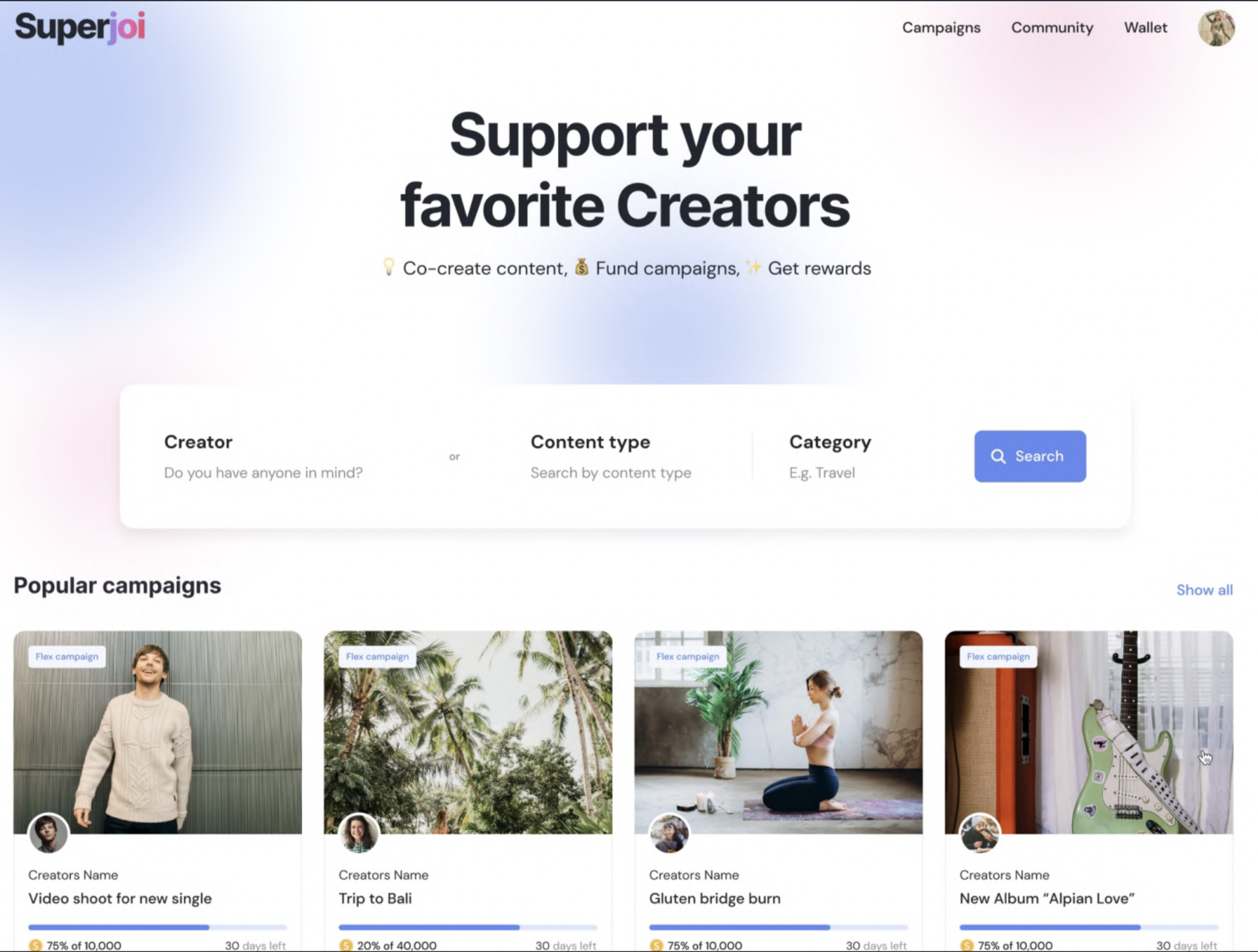
Superjoi - project financing for content creators
Seeing the Market Shift
By late 2022, it became obvious that the market was changing.
Inflation was rising, money was getting tighter, and creators were about to feel the pressure. When people start worrying about rent, bills and the cost of milk, supporting creator projects becomes harder.
So we had to evolve. That is much easier when the first version is still small, which is the whole point of an early MVP.
Superjoi could not just be a crowdfunding-style platform. It needed to become something more practical: a toolkit that helped creators build multiple income streams and become more resilient.
That was the shift from Superjoi 1.0 to Superjoi 1.5.
We moved from simply helping creators fund projects to helping them build a stronger creator business.
Building the Creator Hub
The platform evolved into a broader creator hub.
Creators could build profiles, showcase their work, connect with fans, grow their community and create a stronger online presence.
The idea was simple: your profile should not just be a link-in-bio page. It should be your creative home.
A place where fans can discover who you are, what you do, what you are building and how they can support you.
We wanted Superjoi to help creators turn followers into superfans, and superfans into active supporters.
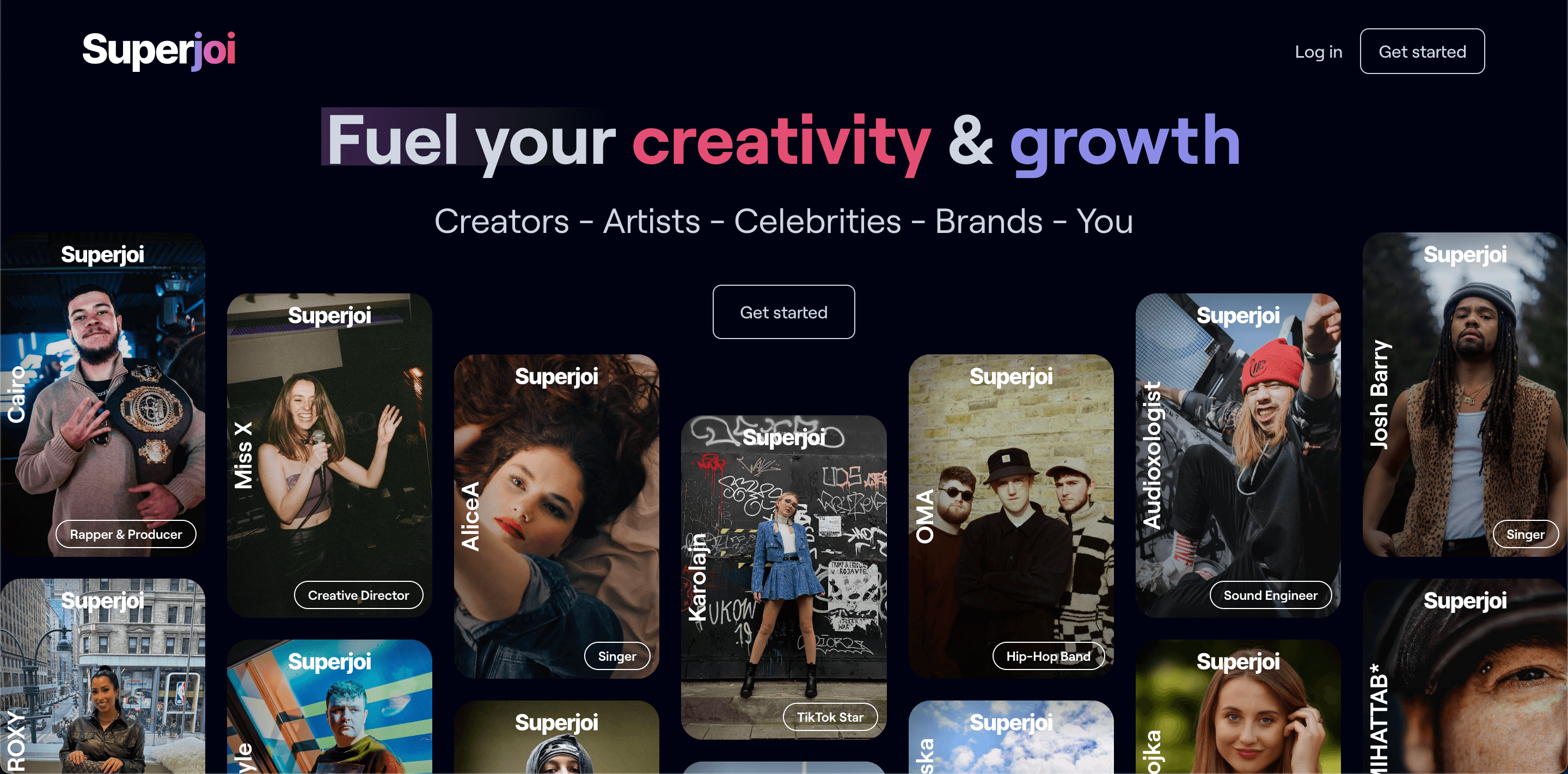
Challenges: Connecting Creators and Brands
One of the features we introduced was Challenges.
This was designed to help creators connect with brands and compete for collaboration opportunities.
Creators could showcase their talent, brands could increase engagement, and the whole process became more organic than traditional influencer marketing.
It worked especially well for platforms like TikTok, where creativity and speed matter. Instead of forcing boring ads into people’s feeds, brands could work with creators who already knew how to create engaging content.
For creators, this opened another income stream.
For brands, it created more authentic engagement.
For Superjoi, it pushed the platform further into social commerce.
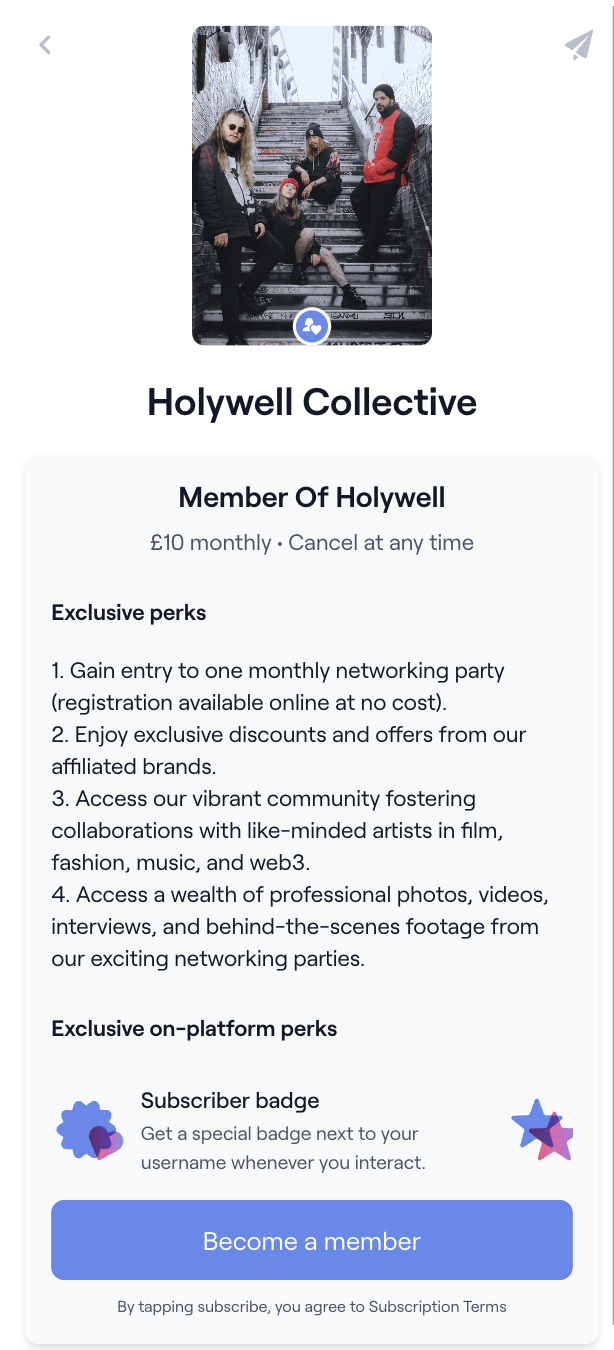
Become Member of Holywell and enjoy one event a month with open mic
Memberships: Turning Fans Into Supporters
The next big step was memberships.
We knew subscriptions were going to become a major part of the creator economy, so we added a way for fans to support creators directly through recurring memberships.
This gave creators a more predictable income stream and helped them build closer relationships with their most engaged fans.
For creators, it meant stronger monetisation.
For fans, it meant being part of a smaller, more meaningful community.
For Superjoi, it meant recurring revenue and a more sustainable business model.
Win-win ✨
Partnerships and the UK Creator Scene
We also worked on partnerships that could bring real value to creators.
One of the angles I cared about was independent music.
There is a huge wave of independent artists who are not part of the traditional industry machine. Many of them are incredibly talented, but they need better tools, better exposure and better ways to monetise their audience.
Through partnerships with organisations like AIM and Holywell Collective, Superjoi started creating more opportunities for independent musicians and creators in the UK.
That part mattered to me because the creator economy should not only work for the top 1%.
It should work for independent artists, musicians, vloggers and creators who are building from the ground up.
What I Learned
Superjoi evolved a lot.
It started as a project-financing platform for creators and became a broader social commerce and creator monetisation platform.
We built across time zones, worked with a distributed team, tested different models, adapted quickly and kept moving as the market changed.
That experience taught me a lot about startups.
You can start with one idea, but the market will tell you what it actually needs. The important thing is to listen, adapt and keep building.
For me, Superjoi was about more than creator monetisation. It was about giving creators better infrastructure, more ownership and more ways to turn their talent into a real business.
The creator economy should be more inclusive, more transparent and more in favour of the artist.
That was the mission behind Superjoi 🚀

During my time building Superjoi in LA